Thursday, April 22, 2010

4-H Field Trip


We took a great 4-H field trip recently to the University of Washington Greenhouse and Insect Lab. We got to see poisonous frogs, carnivorous plants & the worlds biggest seed. Here it is. It comes from a palm. Crazy.


We reviewed how plants reproduce using pollination. We talked about what a fruit is. We saw lily pads big enough to hold small children.


We saw lots and lots of incredibly gorgeous plants. It almost made me want to keep all of my orchids instead of giving them away because I forget to water them. Maybe.


Here is a picture of the kids getting to touch a Venus Fly Trap to make it close. We got to watch as our guide fed a little squirming caterpillar to the plant. The kids loved that part!


After seeing all of the plants in the greenhouse, we went to the Insect Lab and learned about research being done on giant moths and how they fly. We got to watch a moth flying in a wind tunnel where scientists study their shape and aerodynamics in the hopes of applying what they learn to robotics and engineering. Very cool. A soon-to-be moth...


This was a wriggling pupae that we got to hold. Apparently, one researcher made a mold of one of these and now periodically fills the mold with chocolate...which he then leaves out on the counters in the lab for people to munch on during the day. Hee hee. I like a good sense of humor.


Thanks University of Washington scientists!!! We had a great time!

Tuesday, April 20, 2010

Yum, Lovely, Yum, Fun


I had a wonderful dining experience last weekend at Kurtwood Farms on Vashon Island, Washington. A cousin who appreciates good food took my husband and me out to celebrate our recent significant (ending in zero) birthdays.


It was a beautiful spring day and we took the ferry from West Seattle to Vashon and arrived at the farm just before dinner. We had time to walk around and check out the grounds, peek at the animals and ogle the raised vegetable beds (poured concrete, nice!).


Kurtwood Farms is run by Kurt Timmermeister, a very friendly, informative and congenial fellow who obviously works his butt off on a regular basis. He has a 13 acre farm on which he raises Jersey cows, sheep, pigs, chickens and lots of fruits and vegetables. He does most of the farming himself, with only one part-time farm hand to help out. His is more than a full-time job, and an obvious labor of love.


On many Sunday nights he hosts a dinner for 20 (or so) people where guests are served from the bounty of those 13 acres.


In fact, we ate food produced there exclusively...the only items that Kurt serves that are made off of the farm are salt, pepper, sugar, flour, coffee and wine.


When my husband asked him about olive oil, Kurt's response was "We don't use it. We only use butter." Works for me. I'm not afraid of butter. And oh, what good butter it is! When I first saw the crock of it sitting on our dinner table I remarked at its yellowness. Kurt explained that Jersey cows don't absorb carotene from their fresh diet and, therefore, pass it along into the cream and other dairy products that he makes. This makes the butter a beautiful color. It was also super yummy.


Visiting chef Tyler Palagi did the food preparation as Kurt assisted and got things ready for our group to be seated. We sipped wine and sampled incredibly flavorful flat bread pizzas made with ingredients like Kurtwood Farms cheese, caramelized onions, and cured pork belly. The pizzas were cooked in the outdoor wood-fire oven near the main kitchen and dining area. Tasty!


Once seated at the table, we were served sweet tomato soup with homemade bread and the aforementioned butter. The tomatoes were canned last fall and tasted as fresh as...well...fresh tomatoes.


Here is where my photo record stopped. I was too busy eating to take any more pictures. We continued our meal with an antipasti plate of cheeses, prosciutto, and tomato jam. Next came slices of cured pork belly, fresh pasta, broccoli with cider vinegar and bacon, beef with sauteed leeks, cauliflower with red currants and dried chilis. There were eight courses in all, served over three and a half hours. No dish had more than four or five ingredients. It was all incredibly fresh, flavorful and simple fare.

During all of this, we chatted with the people sitting next to us at the long, wooden table. I had the pleasure of visiting with a couple from Vashon who knows Kurt and have been for dinner there before. Conversation was lively. We finished up with a butter cake served with fresh cream and rhubarb sauce.

Kurt has an email list of folks who he sends alerts to periodically, announcing upcoming dates to reserve your spot at the table. It's harder to get in during the summer and harvest months, but would be very much worth it. I hope to go back again soon and bring some friends!


Saturday, April 17, 2010

Ree & Me

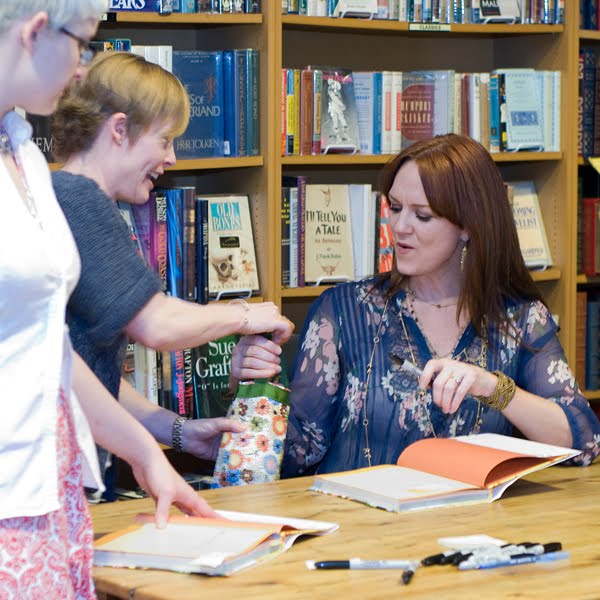
Today I got to meet Ree Drummond (The Pioneer Woman) in person. She was doing a book signing nearby for her recently released cookbook. I stood in line with hundreds of other people...OK, women...and maybe two guys. I was amazed at the whole book signing process and how organized the store was that hosted. Third Place Books had some well-established systems to move large numbers of people through the line very quickly. I wasn't nervous at all until I got up to the "next" spot, then suddenly my adrenaline surged and my heart started beating and I felt like I was at a junior high dance or something. My lips twitched when I tried to smile for the pictures that were taken of the two of us. I won't show you one of them because I look like I'm in pain, and I wasn't. Just nervous. Ree was really friendly and remembered my soaps and my company right away. That was very nice for me.

A month or so ago I made up some custom bars to send to her as a thank you gift for the lovely blog post that she did in February about my business. I was planning to send them in the mail to her, then I found out she was coming to Seattle. I decided to wait and give them to her in person. I got to hand her a little bag with the gift soaps (actually just four of them, I sent the others by mail) when I met her. I hope she likes them. They were fun for me to make...

Thursday, April 1, 2010

How To: Easter Eggs


How did you dye eggs growing up? I remember using melted batik wax and making some of the coolest creations imaginable with my Mom. She set the bar pretty high for me, I'm afraid.

We tried out a new method today, which we loved...so I decided to share. I can't take credit for the initial idea, but we did mix things up a bit in terms of materials and technique to make it as kid-friendly as possible.


You need to have contact paper (we used the clear kind that I always have around for miscellaneous projects), scissors (a variety of styles with fancy edges are good, but plain ones work just fine too), fancy shaped hole punches (the sort that can be found in scrapbook shops or craft stores), hard boiled eggs, food coloring, water, vinegar.

Prepare your bowls of dye the way you would for most Easter egg projects: warm water, a tablespoon of vinegar, 10-15 drops of food coloring.

Using your scissors or fancy hole punches, cut shapes out of the contact paper (with the paper backing still in place). You don't want the shapes to be too large in diameter because they won't bend enough to adhere to the convex surface of the egg. Small shapes (1/2 inch or less), or long narrow strips work best. Peel off the paper backing and apply the shape to your clean egg like a sticker.


Important: use your finger nail to gently rub the contact paper shape onto the egg's surface to make sure that it's completely stuck on. If there are bubbles or edges that have not made contact, the process won't work.

Now, dip your egg in the dye bath to add your first color. Let it sit in the dye bath until it reaches your desired hue, remove it, and dry it off with a towel. It also helps to wear a white velvet ballerina costume while you do it...not sure why.

Once the egg is completely dry, you can experiment with overlapping images and layered colors by removing the contact paper shapes and adding new ones in whatever fashion tickles your fancy.


If you're doing this project with young children, I would recommend starting out with at least some of the shapes pre-cut, as the contact paper can get a little tricky for small fingers and hole punches. My daughter was very proud of this snazzy coyote egg that she created. The detail that you can get is truly amazing.


Have fun!

Friday, March 12, 2010

Meet Your Maker, Part II

Me, part deux…

When we first moved to Seattle, I started waiting tables at an Indian restaurant and going to school for my master’s degree in teaching. My future mister tried a couple different career paths, eventually settling into a financial field. We lived in the Fremont neighborhood “the center of the universe” and got a puppy named Molly.


I finished graduate school and quickly got an ESL teaching job. I was frequently mistaken for a middle school student in the halls at school. I’m about the same size as most of the students, and apparently I looked pretty young (I hated getting carded then…now it makes my day). I loved my job and the young immigrants that I got to work with. They were (still are, in fact) interesting, industrious and engaging. I often feel a pull back to the classroom that I may follow at some point, or maybe I’ll just travel the world to visit the places they all came from.


But I was busy. We had one, then two, then three little chunky-cheeked babies. I gardened, made soap, sewed slip covers, made baby food and changed diapers. I decorated one house, then another. We finally landed in a part of Seattle that we just love: Ballard. It reminds me in some ways of the small town where I grew up, but is still very much a part of the city. I also like that it has the only Nordic Heritage Museum in the United States. My son’s soccer team chant a few years ago was “Lutefisk, lutefisk, lefse, lefse! We’re the Ballard Vikings! Ya, Ya Betcha!” Priceless.

My older kids have started school and we now spend lots of time in 4-H, music lessons, hockey and soccer. I am one of the founding members of Elliott Bay Pipe Band and do my best not to embarrass my banditos. It helps that I have 28 years of piping experience to fall back on. I try to grow lots of berries and vegetables, sew things, and learn something new whenever I can. I try to be faithful and mindful of the earth and the trees and the creatures around us, like my parents always have been. I try to be careful about what we consume and what we throw away. I try to do, more than I talk. I also try to stretch a penny as far as it will go (Granny Gretha) and wash out our Ziplock bags many times before they get thrown away (Grandma Evie). Stewardship takes many forms.

So that’s me, for now. I have big plans for the future. I have not gone back to teaching or learned how to knit yet, because I am budgeting my time in the event that I become the overlord of a vast soapmaking empire. We’ll see what happens.

Thursday, March 11, 2010

Meet Your Maker

…soapmaker, that is.

It has been suggested to me, by people whose opinion I trust, that when someone makes a handcrafted product like I do, folks like to know a bit about the person who made it. I struggled for a while with the question of whether or not anyone actually wants to read about my personal history, or if I am secretly harboring a huge ego that can only be fed by a me, me, me entry. I finally decided to go ahead with this post since maybe my kids will be interested someday. We’ll see about that.

So, then…here’s a little bit about me, Anne.

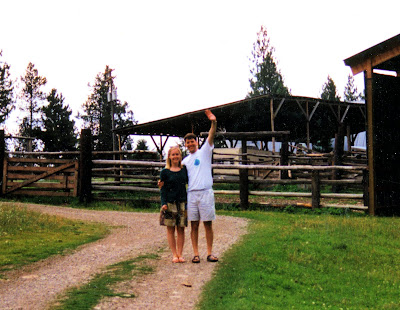
I grew up in North Idaho. My earliest years were spent on a ranch set between the Selkrik Mountain range and the Rathdrum Prairie. I lived there with my parents, brother, and lots of extended family. My people are an eclectic mixture of Scandinavians with Celtic connections. I guess it’s just one big gene pool anyway…those Vikings did get around a lot.

The creative and care-taking occupations are well represented in my family. Pretty much everyone is a teacher, a preacher, a counselor or a musician. I spent my childhood playing on the ranch with my brother and cousins, making forts, tagging along after my parents and grandparents, and watching Gilligan’s Island and Hee Haw.


When I was eight, my parents parted and I began to divide my time between the ranch and my mother’s house in nearby Coeur d’Alene. My younger brother and I comfortably went back and forth between the ranch life with our livestock-raising father and the “city” life with our college professor mother & stepfather.


My parents’ separation was a catalyst for all sorts of independent activity for me…I became a better cook, a better seamstress, a better gardener…all because I had more responsibility and wasn’t just depending on them to take care of things for me. I became my brother’s chauffeur too. Yes, I got my driver’s license at the age of 14. Thanks Idaho farm-friendly driving laws!

I was a complete overachiever and teacher-pleaser in high school. I got good grades, took AP classes whenever possible, played several instruments, edited the school newspaper, was on the debate team, in Model United Nations, went to Girls State (in Pocatello!) and was class president my senior year. I listened to folk and alternative music, cut my hair in a spiral bob which normally covered half my face, and secretly spurned people with tans. I did not date. Nobody ever asked me out. Ever. I wore a red blazer in my high school yearbook picture. See...Sheesh.


I decided to go away to college in Minnesota because I had connections there (it is the Scandinavian Mecca of the U.S.) and because it was sort of far away. I attended Macalester College in St. Paul, a Presbyterian school with its own bagpipe band. I played in the band, studied History and Art History, and tutored immigrant kids in English as a Second Language. I also studied abroad in Scotland for my junior year at the University of Glasgow. It was here that I met my polar opposite (at least on paper), New Jersey-born husband. Funny story.

We dated from afar for our last year of college and then decided to make our next move together. We weren’t sure where to put down roots, just that we would put them down together. Seattle ended up being our destination because it was enough of an urban area for his taste, and enough of the Northwest for mine. Good choice.


Follow-Up...Me, part deux.

.

Saturday, March 6, 2010

How does soap clean?


How does soap clean?

Soaps and detergents both do a good job of cleaning. They are “surface active” substances (surfactents), which means that they make water better at cleaning surfaces. The water is doing most of the work, and the soap/detergent is facilitating the process. They are a help because they break the surface tension of the water, which has a very high natural surface tension…think about the beautiful photos you’ve seen of a drop of rainwater sitting perfectly perched on a leaf after a rain. It’s the surface tension that keeps the droplet intact.

Soaps and detergents burst the bubble of surface tension and allow the water to permeate fibers, flushing out dirt, oil and stains. It’s a little more complicated than that, because the soap/detergent molecules also have “tails” that are lipophilic (oil-loving) and so will attach to the grease and oils that help dirt and stains adhere to surfaces. The hydrophilic “heads” of a soap molecule remain connected to the water molecules to which they are attracted and are then easily washed away with the water, taking their dirty tails with them. A soap molecule basically goes into a grimy water bath (let’s call it a dive bar), wiggles its butt, and says “come on you dirty boys, I’ve got a better party to take you to, hop a ride with me!” And like moths to a flame, the dirt particles fall prey to soap’s unavoidable attraction…or at least that’s the way it plays in my brain.

How is soap different from a detergent?

Soap and detergents both work on the same principle. The difference is in the components that make up each substance. Soaps come from naturally occurring triglycerides (fatty acids and glycrol) mixed with sodium hydroxide. Soap is biodegradable because over time it breaks back down into its original components…which came from nature to start with.

Detergents are made from propylene (which used to be burnt off as waste by the petroleum industry) and sodium hydroxide. Propylene molecules are manipulated to form a compound that will react with sulfuric acid. Next, sodium hydroxide is added to neutralize the sulfuric acid resulting in a sodium salt similar to the one found in soap.

Detergents either do not break down at all, or are broken back down into their original petrochemical ingredients and are harmful to wildlife. That being said, if you are using even true soap in a place where the “gray water” is not being treated (like when you’re camping), always be sure to dispose of the waste water thoughtfully. The bacteria that cause soaps to break down are not present in water in sufficient amounts to allow for timely degradation. Before the stuff is degraded, damage to water and life in the water will be done. The bacteria that break down soap do live in soil in much larger quantities. That means that when you wash, make sure that all your soapy rinse water ends up in soil. Only dump your waste water in the woods away from fresh water sources like lakes and rivers.