Sunday, November 28, 2010

Great Shaving Lather

I have spent quite a long time trying to perfect my recipe for great shaving soap, but even great soap can be disappointing if you're not using a good method for building shaving lather with your brush.  The following is an illustrated example of one reliable method, though it's not by any means the only one.  Since I didn't grow up shaving myself, I had to learn from somewhere.  My thanks goes to the guys over at Badger and Blade for their suggestions and shaving "how to" resources.

Loading the Brush with Soap:
Fill sink with hot water and soak brush for 3-5 minutes. This allows the bristles to retain and control the amount of water in the lather.

Place a thin layer of water on your soap and let it soak for at least a couple of minutes.

Remove brush from the hot water and squeeze bristles vigorously, wringing out most of the water. Give it a couple of good shakes as well.

Dump the thin layer of water off of soap and begin swirling your brush in a circular motion with light to medium pressure. Add some plunger motions, using the whole brush and including the sides of the brush. Continue swirling until a paste-like consistency begins to form on the top of the soap and on the brush.

Bubbles mean too much water. A large volume of lather means too much water.
Continue to swirl until a noticeable audible and tactile difference is made when the brush moves over the soap. When the paste is forming the brush is noisier and seems to drag over the soap instead of smoothly going over the top.
Take a look at your brush, do the bristles clump together? If yes, you're done. If no, continue to swirl and load.

Now you can build lather on your face (see following), in your hand, or in a separate bowl.

Face Lathering Method:
Follow all of the preceding directions for loading up your brush with soap.
Give your face a liberal splash of warm water and leave it dripping.
Take the brush to your face and swirl/scrub/paint until the lather reaches a nice, thick consistency (peaks that stand).

If lather is too thick, add water to the brush a few drops at a time by dipping only the tip of the brush into your hot water. If lather is too thin, return to the soap for 5-10 second intervals. If you need more lather at any time during the shave just work the soap with your brush again.

Here's a great video that shows this technique, along with some others, for building lather:


Happy shaving!

Monday, November 22, 2010

Tallow

When I first started making soap a number of years ago, all my bars contained a large percentage of tallow, which is rendered beef fat. It is an extremely hard, white substance that is so pure that it can be stored at room temperature for extended periods and doesn’t require refrigeration. I used tallow because the vintage book that I first learned soapmaking from recommended it, and also because I had an abundant and inexpensive supply as the daughter of a cattle rancher. I love the quality of soap that you get when tallow is mixed with other vegetable oils like coconut, palm and olive. It produces a hard bar with lots of stable lather and abundant bubbles.


Tallow is arguably the most traditional ingredient for cold process soap in the United States, particularly in the West. Homesteaders and settlers who had to make their own soap from scratch on a regular basis would use whatever fats or oils were handy. They would mix them in a tub with water and the potash left from burning wood and could achieve a very soft, but usable soap from those ingredients they had on hand.

 Most handcrafted, cold-process soaps on the market today do not contain tallow. This is probably a result of a couple of factors. I think that generally folks don’t like the idea of washing with something that contains animal fat. Most people don’t understand that even though fats and oils are base ingredients in soap, the chemical process that occurs in soapmaking doesn’t leave any fats or oils behind (unless it’s on purpose). The sodium hydroxide actually changes the base ingredients into a whole new chemical substance, so there’s no beef fat being rubbed on your body. The other issue is an environmental one. By using beef tallow in soap we are consuming beef products, the production of which puts its own unique strain on the environment and natural resources.

I switched to making all vegetable soaps when I began selling to the general public, but I have struggled all along with how to choose my ingredients and balance their performance in the soap with the environmental impact that their use has on the world we live in. Most of the best soapmaking oils are produced far, far away and require a large amount of energy to harvest and transport to where I use them. To me, this makes the choice of vegetable oils over tallow less straightforward. Like leather, tallow is more of a by-product of the beef industry than a driving economic force on its own, and it’s local…in my case, very local.


I will now add one more variable to the tallow equation: shaving. There is a growing and very vociferous contingent of wet-shaving aficionados who swear by tallow as an ingredient in their shaving soaps. Visiting a site like Badger and Blade will give you some sense of the spirited debate that is going on in the burgeoning wet-shaving world about traditional tallow soap pucks and the rapid decline in their availability. The world seems to need more tallow shave soap.


So, I have decided to re-introduce tallow as an ingredient in a limited fashion to my soap offerings. My two new shaving soaps both contain a generous amount of tallow and are mixed with other vegetable oils to produce a great, foamy lather and memorable shaving experience. It’s taken me longer than I expected to hone my recipe and perfect my finished product, but it’s finally done! I am happy to announce the arrival of Filthy Rich Shave Soap and Old School Shave Soap, which are added to my all-vegetable Smooth Shave Soap to round out the selection. I sure hope everybody likes them!


Saturday, November 20, 2010

Potty Mouth Soap


photo courtesy of Tack-o-Rama

I never had my mouth washed out with soap as a child (I was angelic), but my husband did…several times. The most memorable instance was in junior high when he cursed out the father of a good friend. The practice of mouth washing with soap goes way back and has mostly been followed in Britain, Australia and North America. I don’t think I could ever actually do it to my own kids, but it makes a great theme for soap, doesn’t it?


My new Potty Mouth Soap has been in the planning stage for quite awhile. I’ve run the concept by many of the parents at my kids’ school and always gotten a chuckle and thumbs up response to the idea. So here it is! It’s actually a lovely soap in its own right, with clove and sweet orange essential oils. You might not want to waste it on mouth washing.

But then again…maybe you would. Because we all know that prudence and youth do not always go hand in hand.


Friday, November 19, 2010

Exotic Escapade


My mother taught History of Civilization in college for many years. She has always loved learning about different countries and cultures and tried to visit them, if she could. My mom and stepfather used to travel overseas almost every summer, and often led others on study tours of far away places.  The two of them were even married in Athens.  My  brother and I were very fortunate as youngsters to go abroad with mom to places that expanded our understanding and interest in the world. I think my fascination with other cultures and ethnicities is a large part of why I decided to become an ESL teacher as an adult. Some of my clearest memories are of the places that we traveled…with new sites, tastes, sounds and smells. I can close my eyes and imagine them now, even though I visited many years ago. Travel to new destinations is like manna to me. I even met my husband overseas!

In honor of this hankering, I have created a new soap that celebrates travel to distant lands and the exotic adventures that can be had there. I chose a sumptuous essential oil blend that includes frankincense and myrrh, and then added nourishing mango butter to the mix. And to top it all off, the handy travel tin that it comes in makes it just perfect for accompanying you on all those great escapades you have yet to experience! Just keep it clean and don’t get arrested on a midnight train to Istanbul.


Thursday, November 18, 2010

Theo Chocolates


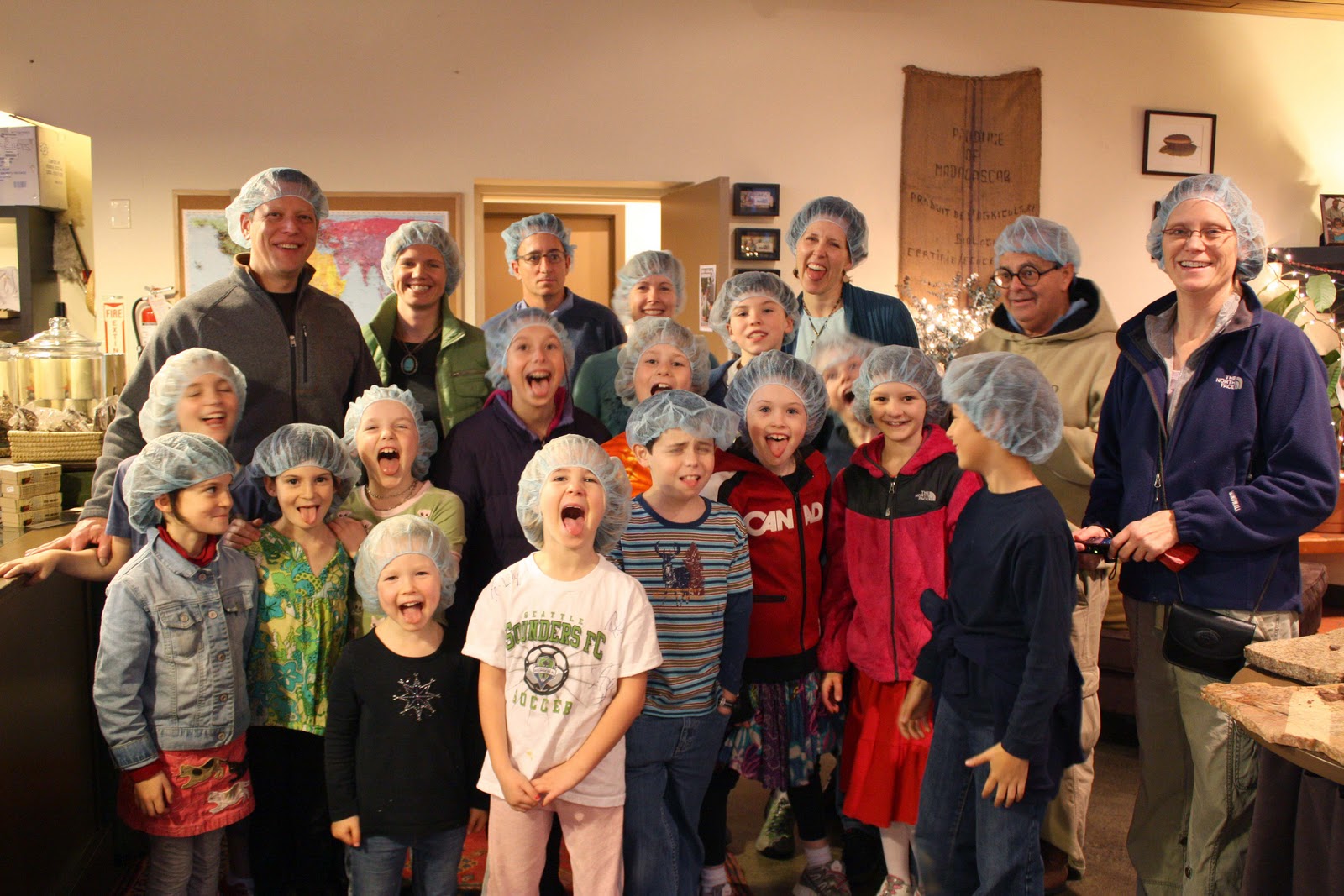
Yesterday we went on another great 4-H adventure.  This time to the Theo Chocolate Factory in the Fremont neighborhood of Seattle.  Theo Chocolates makes organic, fair trade treats and is the only chocolate factory in the US that gives tours of its operational facilities.  We had a great time.


The lobby/entrance was filled with little piles of samples.  This one was my favorite: a dark chocolate with orange oil. 


We all had to wear hairnets for the tour.  Stylish!


I won't begin to try and explain what this machine does, but doesn't it look cool?  And those are bags of sugar on the pallet behind it.


This was actually waste chocolate that gets separated from the chocolate slurry because it was too thick and lumpy to be used in the bars.


These were the outer casing (husks?) of the cocoa beans after they'd been roasted.  They smelled great!


Individual chocolates being nested in their little paper cups before they make their way to the store. 


And finally, perhaps my favorite thing:  a giant chocolate Buddha head...just for fun.

Wednesday, October 27, 2010

Shaving Brushes…TMI?

My dad has always lathered up for a shave using a puck of traditional shaving soap in a mug and a shaving brush. I remember the sound of the tap, tap, tap as the edge of the mug came in contact with the brush handle as it went ‘round and ‘round to build up more foamy lather. My husband has also become a convert to traditional shaving or “wet shaving”, as it’s often called. He likes the morning ritual of it, as well as the fact that it’s natural and much less wasteful than shaving foam from a can.

I have spent the last several years learning as much as I can about how to make a great shaving soap (more to come on that soon). I also wanted to be able to offer my customers great shaving accessories to go along with the soap, so I’ve also been learning lots about shaving brushes. Here’s some of what I’ve found out…

There are basically three types of shaving brushes: synthetic bristle, boar bristle (often just called “bristle brushes”), and those made from badger hair. Synthetic and boar bristle brushes are the less expensive options. Synthetic brushes have the advantage of not being made from an animal, but they lack the flexibility and lather-building capabilities of bristle or natural hair brushes, primarily because they are not capable of holding a sufficient amount of water to build a good lather.

Boar bristle brushes have a much firmer knot than badger hair brushes. This is not necessarily a bad thing. For some types of shaving soaps, a much firmer brush is an advantage in building robust lather, and so might be preferable. The bristles on a boar brush have the disadvantage of breaking somewhat easily, but do offer much better moisture control than synthetic brushes, for a low cost.

A badger hair brush is the softest and therefore most comfortable on the face. With the proper lather-building technique, a fine rich foam can be achieved. Badger hair brushes come in 5 different grades based on the part of the badger’s body where the hair comes from. Badger hair brushes can range in price from $30 to upwards of $600. The price difference is due in part to the availability of each grade. For example, “pure” badger grade hair covers approximately 60% of the animal and its abundance lowers the price. Performance is also a factor. “Silvertip” grade hair comes from the area around the badger’s neck and is the longest, softest and best for holding water and building a moist lather. It’s also insanely expensive.


I have chosen to carry shaving brushes that I think are best in terms of both price and performance. In addition to my lower priced boar bristle brushes, I now carry “mixed” badger hair brushes that I believe are the greatest combination of softness, moist lather-building capability, and price. My badger hair brushes come from China, where wild badgers are a good source of income (and apparently food) for many rural Chinese. The world’s supply of badger hair for art, shaving and cosmetic brushes all comes from 6 different species of Eurasian badgers. Chinese Meles meles badgers are apparently so abundant and such a threat to crops in farming areas that the Chinese government issues hunting licenses to help keep the population under control.

This is all just a bit of background for those of you trying to make a shaving brush decision for yourself or as a gift for a future wet shaving convert. I hope it all helps to inform! Happy shaving!

Friday, October 22, 2010

Costumes at Taproot Theater


We had another great 4-H adventure this week, this time with a visit to the Taproot Theater in Seattle's Greenwood neighborhood. Since it's the costume time of year, we decided to see how real-life sewing and carpentry skills can be put to use in a creative way. We were led on a GREAT tour by Sarah, the friendly and charismatic costume shop manager and resident designer. We were there, almost to the day, one year after the theater sustained major fire and water damage caused by an arsonist on the loose in the neighborhood. He has since been locked behind bars, but the consequences for the theater and many of the surrounding businesses were severe. Luckily, for the neighborhood (and for our club), Taproot was able to rebuild and come back from the ashes.

During our tour, we visited the set for the current show Wedding Belles, which ends this week. We peeked in on the set construction room, which was filled with all sorts of fun carpentry and power tools. We also saw the Green Room and where the actors meet to read through scripts and prepare for the plays, and the make-up room where the actors get ready to go on stage.


But the main focus of our time at Taproot was the costuming department. We were eager to see some sewing in action, and were not disappointed.


They were busy getting ready for the holiday season show Sherlock Holmes and the Case of the Christmas Carol. Here is some of what we saw:


We are planning to go back and see a matinee of the show when it opens at the end of November. We urge everyone to take in a production if you get the chance!! We're so lucky to have a great neighborhood theater like this to take advantage of for shows and as a creative resource for our community. Thanks Taproot!